
Inside the $1.77 Trillion SpaceX IPO
For years, the financial world treated a public listing of SpaceX as a distant, borderline mythical event. Elon Musk frequently insisted that his aerospace powerhouse would remain private until humanity was firmly on the path to colonizing Mars.
The paradigm has officially shifted. Moving with staggering speed following a public S-1 filing on May 20, SpaceX is launching itself onto public markets. Under the Nasdaq ticker symbol SPCX, the company is executing a financial maneuver as daring as its rocket landings.
Why June 12 is D-Day for Global Markets
For retail investors, fund managers, and tech enthusiasts, Friday, June 12 stands as an unprecedented inflection point. It is the day SpaceX officially starts trading.
This isn’t just another tech listing; it is structurally designed to shatter historical financial records.
- The Massive Scale: SpaceX is selling roughly 555.6 million Class A common shares at a fixed price of $135 per share.
- The Historic Raise: The company targets a primary raise of $75 billion (with an underwriter option that could push it past $86 billion). This comfortably eclipses Saudi Aramco’s $29 billion listing in 2019 to become the largest IPO in global history.
- Unprecedented Retail Access: Standard mega-IPOs usually reserve a meager 5% to 10% of allocations for everyday investors. For SPCX, up to 30% of the offering is being channeled to retail investors through platforms like Robinhood, Fidelity, and Charles Schwab.
- Instant Index Impact: Nasdaq has modified its rules, allowing SpaceX to fast-track into the Nasdaq-100 index after just 15 trading days if it maintains a top-40 valuation ranking. Passive index fund holders will gain automatic exposure almost immediately.
Deconstructing the Scale: How We Arrived at $1.77 Trillion
To understand how a company that frequently blows up experimental hardware commanded a launch valuation of $1.77 trillion, one must look past the heavy steel of Starship. Wall Street isn’t valuing SpaceX as a traditional aerospace contractor. It is pricing a three-pronged mega-monopoly across space infrastructure, global telecommunications, and artificial intelligence.
                          $1.77 Trillion Valuation
                                    │
         ┌──────────────────────────┼──────────────────────────┐
         ▼                          ▼                          ▼
 Launch Dominance                Starlink                  SpaceXAI
- 80%+ of US launches       - 12M+ subscribers         - Absorbed xAI
- 90% commercial share      - 63% EBITDA margins       - Colossus cluster
- Falcon 9 reuse economic   - Global connectivity      - Massive AI compute
1. The Launch Monopoly
The foundation of the valuation is absolute operational dominance. In 2025 alone, SpaceX completed 170 successful missions, commanding over 80% of all US rocket launches and roughly 90% of the global commercial launch market. Because of its pioneering rocket reuse technology, its unit economics are entirely unmatched by competitors.
2. The Starlink Cash Engine
Rather than spinning off Starlink into a separate entity—as long rumored—SpaceX kept the satellite broadband network inside the master corporate entity. Starlink is the true mathematical anchor of the valuation. By early 2026, Starlink surpassed 12 million subscribers across 160 countries, raking in $11.4 billion in 2025. It boasts an extraordinary EBITDA margin of 63%, generating the massive, predictable subscription revenue that public markets crave.
3. The $250 Billion AI X-Factor
The wild card driving the late-stage valuation surge was an all-stock deal where SpaceX absorbed Elon Musk’s artificial intelligence venture, xAI. This newly formed “SpaceXAI” division brought the Grok AI model and the massive “Colossus” AI supercomputer cluster under the SpaceX umbrella. The company is actively pitching a vision where Starlink satellites double as a global, decentralized edge-computing network for AI processing.
What and How Markets See This IPO
The market’s reaction to the offering is deeply polarized, creating a fascinating tug-of-war between growth bulls and value bears.
The Bull Case: The Only Space Infrastructure Asset
Bulls see SpaceX as a generation-defining asset with a virtually untouchable competitive moat. The Total Addressable Market (TAM) pitched in the roadshow is a staggering $28.5 trillion, spanning global telecom, defense logistics, orbital tourism, and deep-space infrastructure.
Because Starship drastically reduces the cost per kilogram to orbit, SpaceX essentially controls the toll road to the final frontier. Major institutional money managers view it as a must-own “frontier tech” asset that balances exposure out of traditional terrestrial software.
The Bear Case: Rich Multiples and Substantial Losses
Conversely, traditional value analysts are waving red flags. A valuation of $1.77 trillion prices SpaceX at roughly 94.7 times its 2025 sales of $18.7 billion. While revenues grew an impressive 33% year-over-year, the financial reality remains complex.
SpaceX booked a steep $4.9 billion net loss in 2025, completely reversing its $791 million profit from 2024. This massive cash burn is largely attributed to the immense capital expenditures required to build out the Starlink constellation and the intensive development of the SpaceXAI compute clusters, which bleed roughly $1 billion per month.
Wall Street’s Consensus Warning: Mega-IPOs historically trigger a wave of early retail hype, followed by intense post-listing volatility. With a thin initial free float of just 3% available on the open market, early price action on June 12 could be exceptionally erratic.
The Strategic Horizon
SpaceX’s unconventional “take-it-or-leave-it” fixed pricing strategy bypasses standard institutional negotiations, relying heavily on pure market demand and the “Musk Premium.”
The company plans to use the gargantuan $75 billion capital influx to fund two distinct capital-intensive missions: expanding its AI data center footprint to challenge big tech, and accelerating the mass production of Starship vehicles. For Musk himself, the financial stakes are carefully guarded. He is bound by a strict 366-day insider lock-up period, preventing him from liquidating his holdings during the critical first year of public life.
Whether the stock holds its massive $135 threshold or faces a sharp correction, June 12 will alter the landscape of the financial markets permanently. For the first time, everyday investors won’t just be watching rockets launch into the atmosphere—they will have a direct stake in the financial vehicle taking us there.
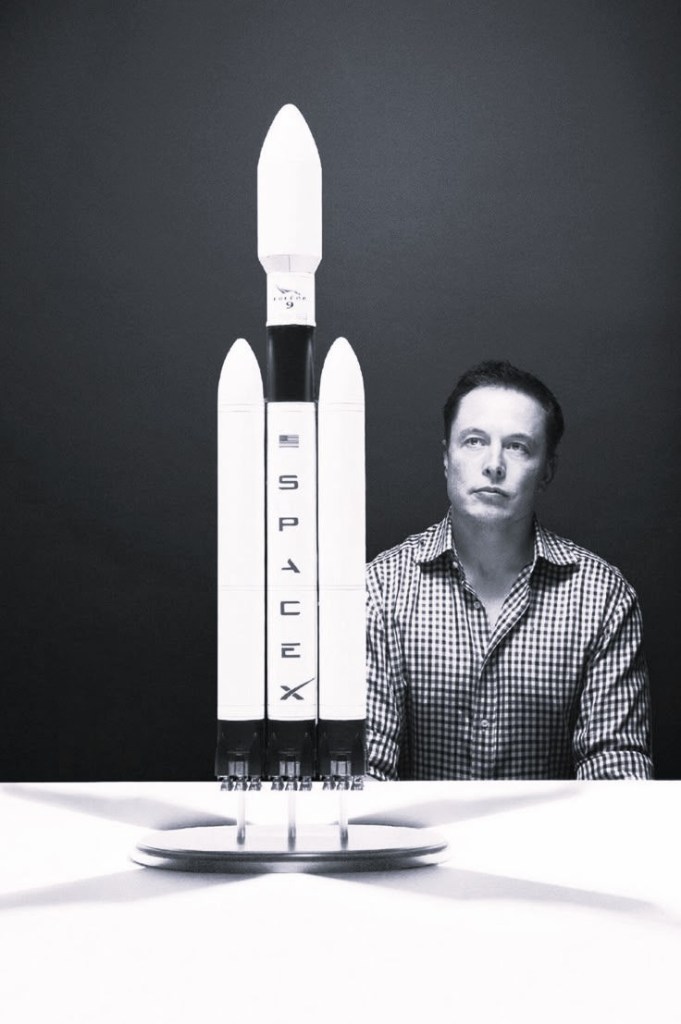
For a closer look at the actual hardware driving this multi-trillion-dollar narrative, check out this SpaceX Starlink Mission Footage. It shows a Falcon 9 launching a batch of Starlink satellites, highlighting the highly repeatable launch cadence that underpins the company’s massive market value.
Bloom Capital Review publishes educational analysis, not investment advice.

 Bloom Capital Review
Leave a comment